Surprise me

Notes on art and craft

Journal

Behind each collection, how to hang it, and what the patterns mean. A new piece with every drop.

Articles
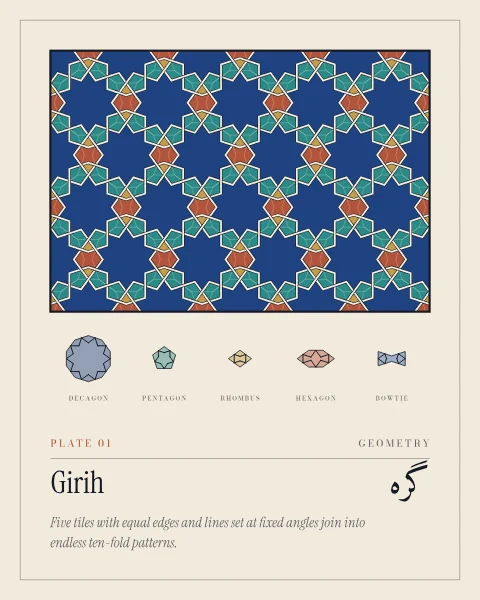
A full field of ten-fold girih pattern: cream strapwork weaving over and under through lapis ten-pointed stars, turquoise pentagons and terracotta and gold pieces, with the faint tile edges beneath. Below or beside it the five girih tiles are laid out as a key: decagon, pentagon, rhombus, elongated hexagon and bowtie.4 October 2026·6 min read

A field guide to Islamic pattern

Girih, zellige, tashbik, muqarnas: the names behind the patterns, and what to look for when you meet them on a wall.
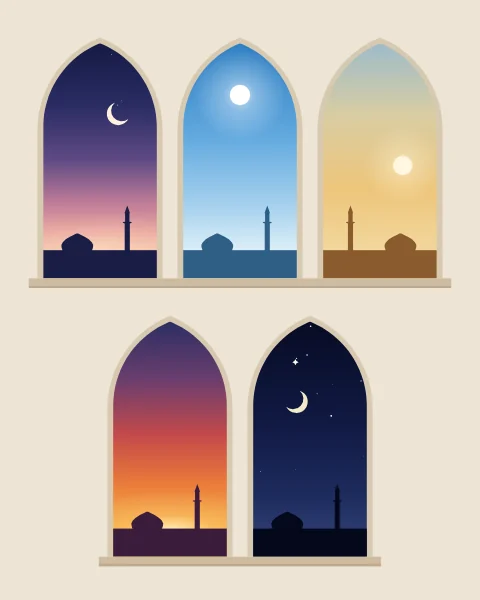
Five pointed arches in a pale wall, each opening onto one time of the day: dawn with a crescent, the high noon sun, the gold of afternoon, the afterglow of sunset and night.4 October 2026·4 min read

Five times of light

How the five daily prayers became a collection about the colour of the sky, from the first rose of Fajr to the deep blue of Isha.
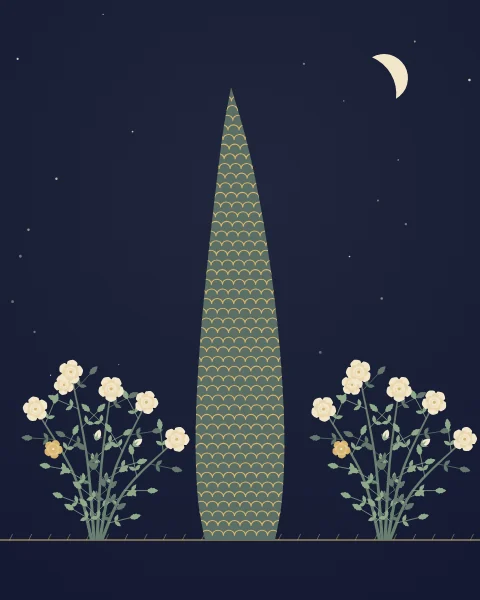
Tall cypresses stand in a row at night with rose bushes in flower at their feet and a crescent moon above.3 October 2026·4 min read

Behind the collection: Nocturne

Why we drew the plants of the Islamic garden after dark, and what each one brings to the wall.

Al-Fatihah 1:1 in cream inside a gold-edged sura-header cartouche on a midnight band, with small gold sunburst medallions on the vertical axis and a thin double gold frame around the page.1 October 2026·4 min read

Hanging Quranic art with care

A gentle guide to the courtesies many families observe when they bring verses of the Quran into the home.

Three woven kilim panels set side by side, each framed by a sawtooth border: an elibelinde figure in cream on madder, a pair of ram's horns in saffron on indigo, and a stepped eye in madder and indigo on cream. Small slits open wherever two colours meet along a straight vertical edge.25 September 2026·4 min read

Reading a kilim

Eyes, horns, hands on hips and running hooks: the motifs of the flat-woven rug, and why their meanings are best held lightly.
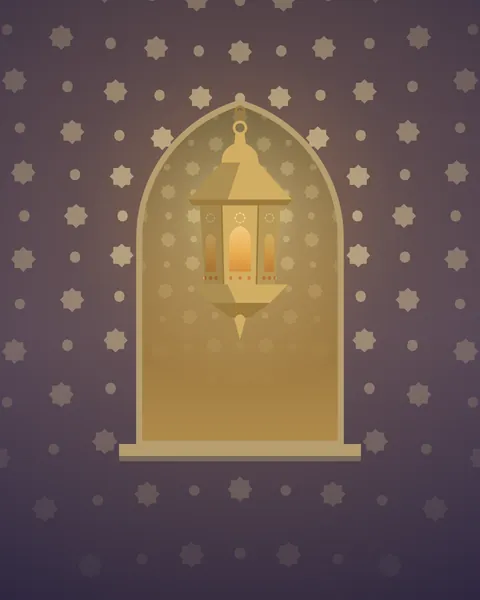
A single large fanous lantern hung from a hook inside a pointed plaster niche. Its windows glow amber, and the star-and-dot pattern cut into its brass is thrown onto the wall around the niche as a grid of light that bows outward and fades into the dark at the edges.20 September 2026·4 min read

Decorating for Ramadan and Eid with prints

Simple ways to mark the month and the feast at home, from a single crescent by the door to a table set for iftar.

The two squares that make an eight-point star, pulled apart so that only one dark wedge still overlaps.16 September 2026·4 min read

The eight-point star

Two squares, one turned on the other: how the khatam is drawn, where it marks the Quran, and where it appears in tile and stone.
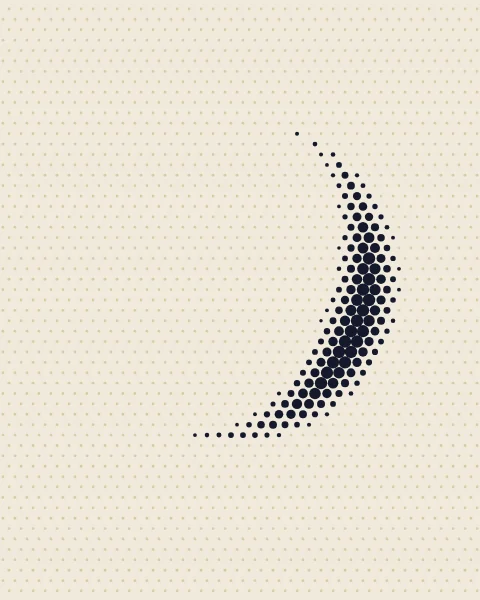
A crescent emerges from a field of dots that swell where the moon is lit.11 September 2026·5 min read

Printing at home or at a print shop: a practical guide

Paper, finish, resolution and ratio: everything you need to turn a free download into a print worth framing.
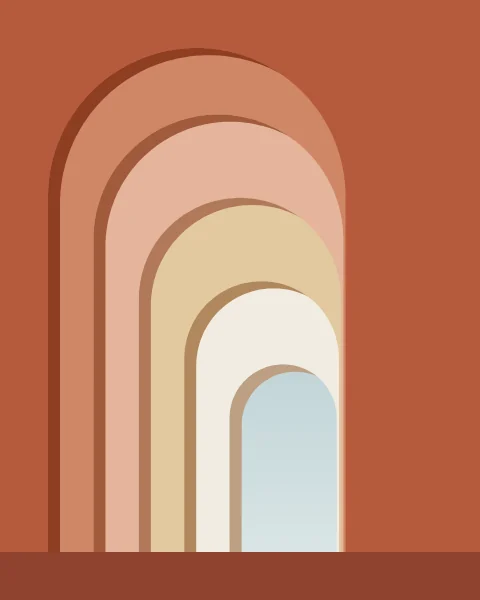
Five walls in clay, rose and sand stand one behind another, each pierced by an arch that frames the next.6 September 2026·4 min read

How to build a gallery wall with free prints

Planning, spacing and palette: a step-by-step way to hang a group of prints that looks considered rather than crowded.
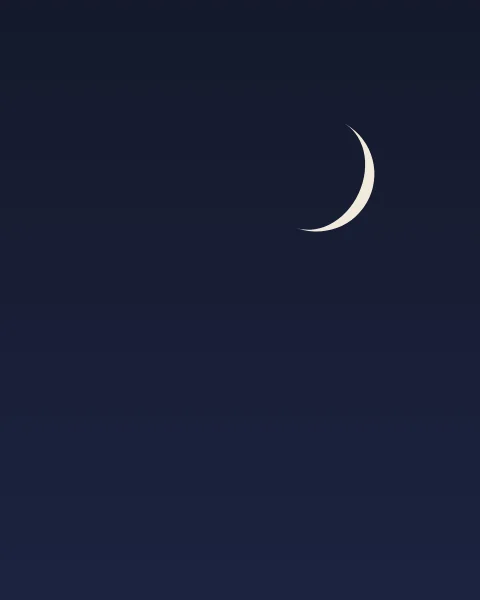
A slim pale crescent alone in a clear midnight-blue sky.1 September 2026·4 min read

What is the hilal?

The new crescent, how it begins each Islamic month, and why we named Hilal & Hue after it.