Natural Dyes
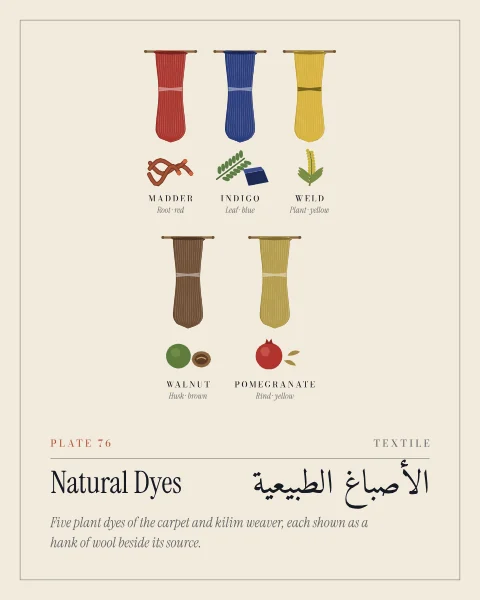
What you seeFive hanks of wool hanging from pegs, each with its dye source drawn beneath it: madder red with its roots, indigo blue with a leafy sprig and a cake of dye, weld yellow with its flower spike, walnut brown with a green husk and a split nut, and khaki yellow with a pomegranate and pieces of dried rind.
What it meansBefore synthetic dyes arrived in the later nineteenth century, weavers across the Islamic world coloured wool with plants. Madder root gave reds, indigo blues and weld yellows; walnut husks gave browns, pomegranate rind yellows, and many colours came from dyeing one over another.
Where it worksA warm, natural plate for a kitchen, a craft room or a living room.
Everything is one ZIP: every shape and size, the phone wallpaper, the SVGs and a printing guide.
